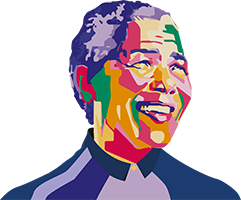
Nelson Mandella

‘Sport has the power to change the world’ – Nelson Mandela, 2000 Laureus World Sports Awards

25 Years of Laureus

‘Sport has the power to change the world’ – Nelson Mandela, 2000 Laureus World Sports Awards


IRTS Global Hub 

IRTS Global Hub
Unprecedented 28-stakeholder partnership kicks off Global Integration of Refugees Through Sport project. 
The Integration of Refugees Through Sport (IRTS) network is a growing community of stakeholders that has evolved significantly over the past decade. Although sport and play have been used for relief and inclusion of refugees for much longer, there is an emerging movement of initiatives and stakeholders who are leading the way in this field. At the start of 2024, the International Sport and Culture Association (ISCA) gathered 28 of these stakeholders to kick off one of the largest Erasmus+ projects ever dedicated to refugee inclusion, the Global IRTS project. 

The two-year project, ‘Global IRTS: Convening the global Integration of Refugees Through Sport Sector’, aims to address the dire challenge of including refugee children and adults into their new communities by strengthening the evidence base, raising awareness, advocating the value of IRTS and building the capacities of stakeholders working on humanitarian actions internationally and locally. 

The collaborative nature of the project will facilitate mutual learning across continents among the project’s 23 full partners, two associated partners and three supporting institutions. This partnership is unprecedented, comprising UN institutions, funding bodies, humanitarian organisations and sporting bodies. While most coordination meetings will take place online, as was the case with the kick-off meeting, two international conferences held in connection with the project, Moving People – Moving Europe in the Slovenian capital Ljubljana in November 2024 and the MOVE Congress in Denmark in 2025, will allow the network to flourish as global leaders in the field and provide valuable opportunities to learn from experiences in other parts of the world.

“We strongly believe that refugee crises all over the world bear resemblances to each other, and that there is high added value from looking at these complex challenges from a global perspective,” ISCA Secretary General Jacob Schouenborg says. “This project has the ambition – probably for the first time ever – to use the Erasmus+ Sport programme to bring together a large and strong group of partners and stakeholders from all over the world, but with a starting point in Europe, to make a significant push for the IRTS agenda in an evidence-based and cohesive manner.”

Key milestones during the project will involve establishing online IRTS communities of practice in four geographical areas (Ukraine, Venezuela, DR Congo and Syria) and three thematic areas (stress relief and MHPSS, learning through play; and host community inclusion); pilot testing of the project’s outputs in Poland, Ukraine, Denmark, Colombia and the US; and recognising outstanding initiatives at an IRTS Awards ceremony at the MOVE Congress 2025.

Global IRTS is the seventh international project being carried out under the IRTS umbrella and runs alongside other initiatives focusing on supporting Ukrainian children and their families through sport, including IRTS Nordic, Integration of Ukrainian Refugees Through Sport and We Play Together!

Find out more about these Integration of Refugees Through Sport initiatives at https://irts.isca.org/ 
 
Key Project Facts

Full project title: Convening the Global Integration of Refugees Through Sport Sector (Global IRTS)
Project period: January 2024-December 2025
Co-funded by: Erasmus+ Sport Cooperation Partnerships
Grant amount: €400,000

Coordinator: ISCA (International, Denmark) and sportanddev (hosted by ISCA)
International sport networks: Scort Foundation (UK), Laureus Sport for Good Foundation (UK), Beyond Sport (UK), PLAY International (France), ISA (Netherlands), GAME (Denmark), Glasswing International (El Salvador), Fundación Grandes Valores, Fútbol Más Foundation (Chile), Common Goal (Germany)
UN Institutions: UNHCR, Regional Bureau of Europe; UNESCO (supporter)
Research organisations: German Sport University (Germany); Center for Advanced Migration Studies (Denmark)
Humanitarian and refugee-led organisations: Save the Children Sweden (Sweden); Terre des Hommes Romania (Romania); Support Group Network (SGN) (Sweden)
National implementation organisations: Ukraine Active (Ukraine); V4Sport Foundation (Poland); Social Innovation Sports Hub (SISH) (Portugal); Center for Healing and Justice in Sport (USA); Compensar (Colombia); DGI (Denmark)
Associated partners and other supporters: Norwegian Olympic and Paralympic Committee and Confederation of Sports (NIF) (Norway); Ukrainian State Scientific Institution "Institute of Education Content Modernization” (Ukraine); Sports and Society Accelerator (India); Right to Play (Canada)
Funded by the European Union
This project is funded by the European Union. Views and opinions expressed are however those of the author(s) only and do not necessarily reflect those of the European Union or the European Education and Culture Executive Agency (EACEA). Neither the European Union nor EACEA can be held responsible for them.

Read more: https://irts.isca.org/update/1177/unprecedented-28-stakeholder-partnership-kicks-off-global-integration-of-refugees-through-sport-project

Uniting for Change: The Global IRTS Initiative's Call to Action at MOVE Congress 2025 

The Global Integration of Refugees Through Sport (IRTS) initiative is a comprehensive effort to utilize sport for the integration and well-being of forcibly displaced populations. 
From June 2024 to June 2025, the Global IRTS project consortium conducted 36 major global stakeholder meetings and strengthened regional partnerships across Europe, Africa, North America, South America, and the Middle East. Laureus Sport for Good was honoured to chair the meetings of the Middle East Working Group, bringing together 9 organisations across Palestine, Jordan, Lebanon, Afghanistan and Iraq.

The primary goals were to build consensus, develop a common approach, and establish online communities of practice in three key thematic areas: mental health, learning through play, and host community inclusion.

This collaborative work resulted in a tangible statement of commitment and a call to action for IRTS, which advocates for the inclusion and integration of refugees through sport, prioritizes the development of sport strategies for refugees, and recognizes the evidence-based impact of such programs.

In October 2025, the Global IRTS Conference, hosted by the MOVE Congress in Copenhagen, served as a pivotal event for this initiative. The conference brought together 899 participants from 62 countries and 210 organisations, emphasizing the urgent need to support the 123.2 million forcibly displaced people globally, including 42.7 million refugees, and highlighting sport as a powerful and cost-effective tool for this purpose. The event fostered stakeholder engagement, networking, and the sharing of best practices.

Crucially, the MOVE Congress provided the ideal platform to officially launch the statement of commitment and call for action. Organisations from all over the world were invited to sign this commitment and disseminate it among their networks, thereby amplifying its reach and impact. We also extend this invitation to you, the reader of this article, to sign the statement and help disseminate its important message.

Key sessions on October 31st addressed critical aspects of IRTS:

- Integration of Refugees through Sport (IRTS) – Realities and Opportunities: This session underscored sport's vital role in social inclusion, featuring personal insights from refugees and expert discussions on challenges and strategies for scaling up integration efforts.
- Safeguarding Sport: Protecting and Empowering Refugee Children: a panel discussion facilitated by - Laureus Sport for Good, focused on the vulnerability of refugee children in sports, detailing how to implement effective protection policies and engage stakeholders to create safe and empowering environments.
- Building Communities through Integration of Refugees through Sport (IRTS): This session explored how sport and physical activity contribute to mental well-being, social cohesion, and community engagement, stressing the importance of collective effort to create inclusive spaces that promote mutual respect and intercultural exchange.

The Global IRTS initiative represents an unprecedented multi-stakeholder partnership involving UN institutions, funding bodies, humanitarian organizations, and sporting bodies, all dedicated to ensuring that sport serves as a fundamental human right and a catalyst for the successful integration of refugees into new communities.



Email Sign up

Email Sign-up

Sign up for all things Laureus

Get regular updates throughout the year